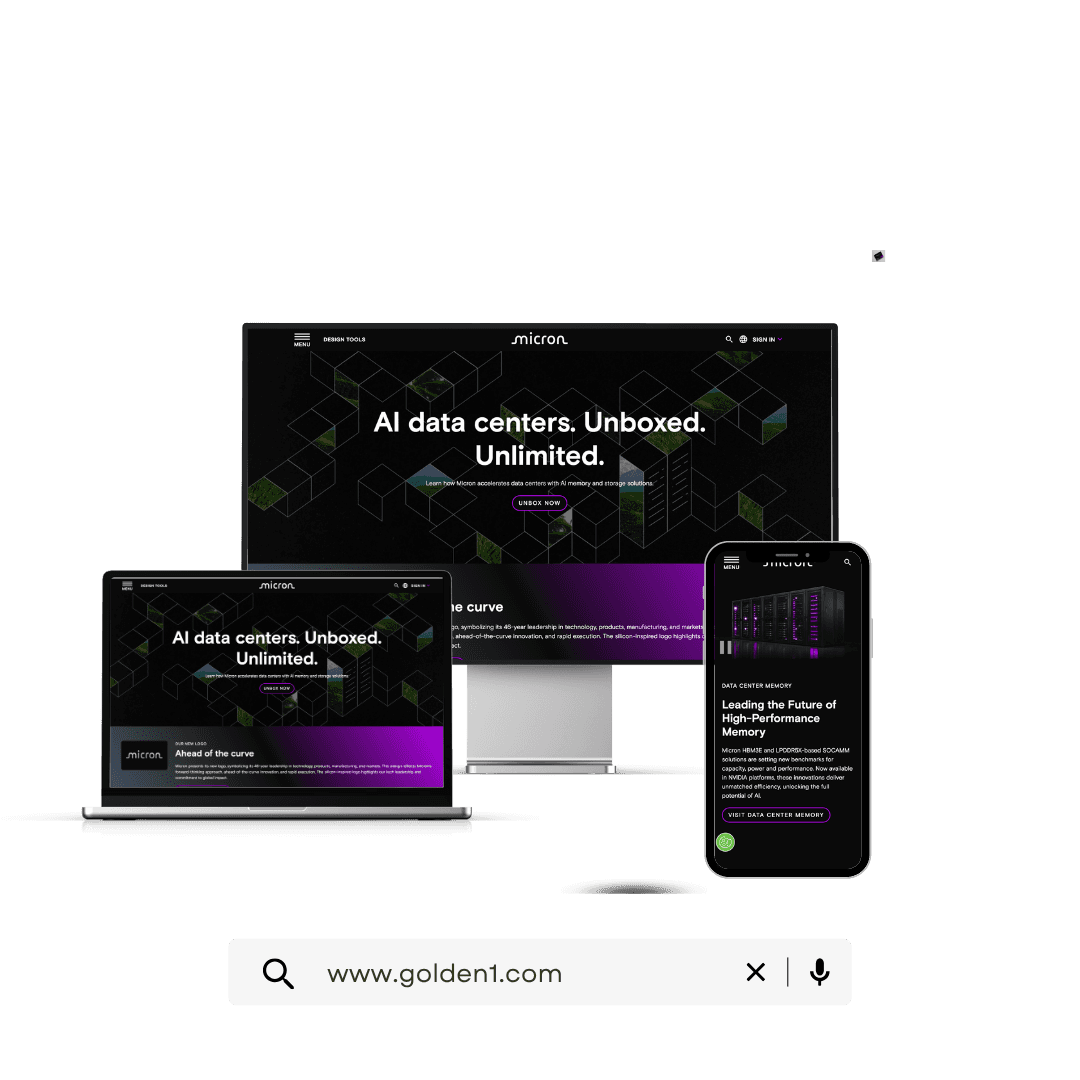
The project itself :
Project Overview
In collaboration with the team, I led initiatives to ensure WCAG 2.1+ compliance while improving usability and engagement across Micron's digital presence. The website also served as a retail-like product discovery platform, supporting high-consideration decision-making for engineers, researchers, and enterprise buyers.
Results:
Organizing large amounts of information into logical groups, using clear labels, and enhancing findability is one of the hardest challenges in enterprise UX
Team:
UX Lead, 2 Product Managers, Developers, Business Strategist, Data Analyst, Digital Marketing Specialist
Tools:
Adobe XD, Microsoft Workfront
My role:
Senior UX/UI Designer
Responsibilities:
My responsibilities spanned user research, wireframing, interactive prototyping, and accessibility design - bridging the gap between Micron's cutting-edge brand image and the everyday experience of the people using their site.
All about the user :
User Research
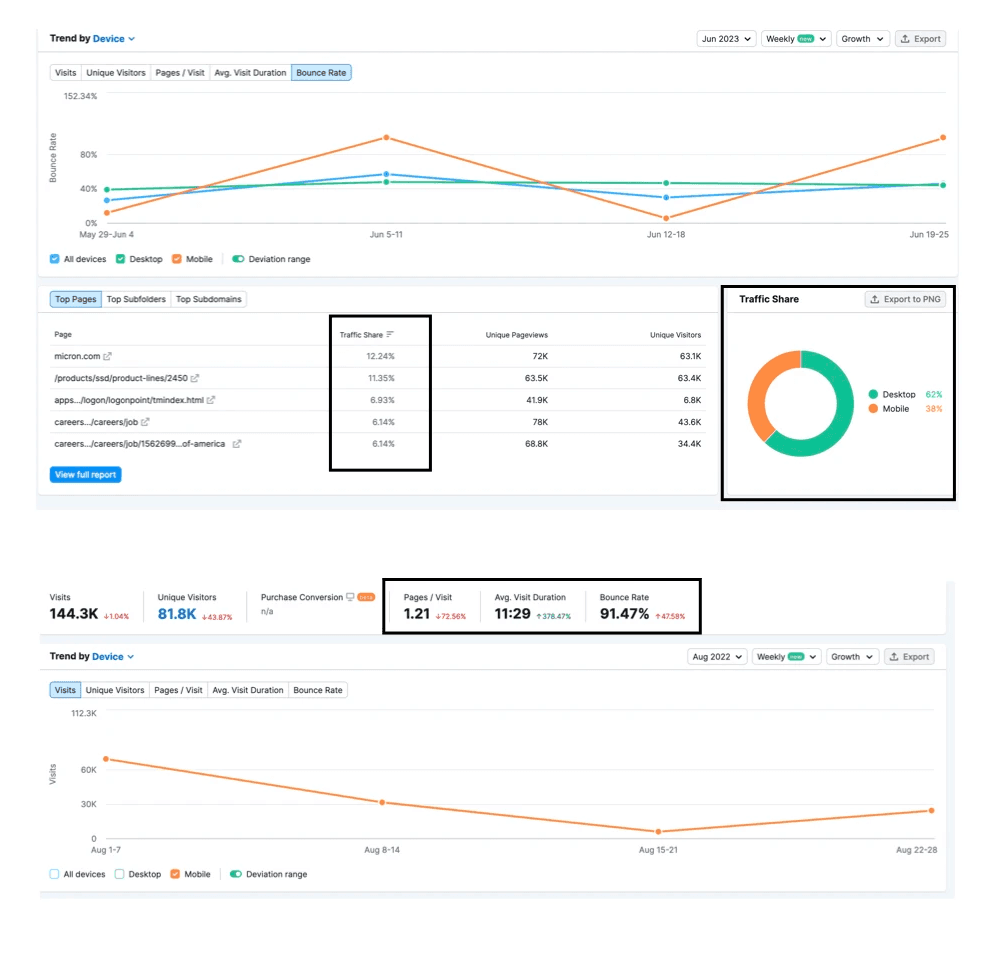
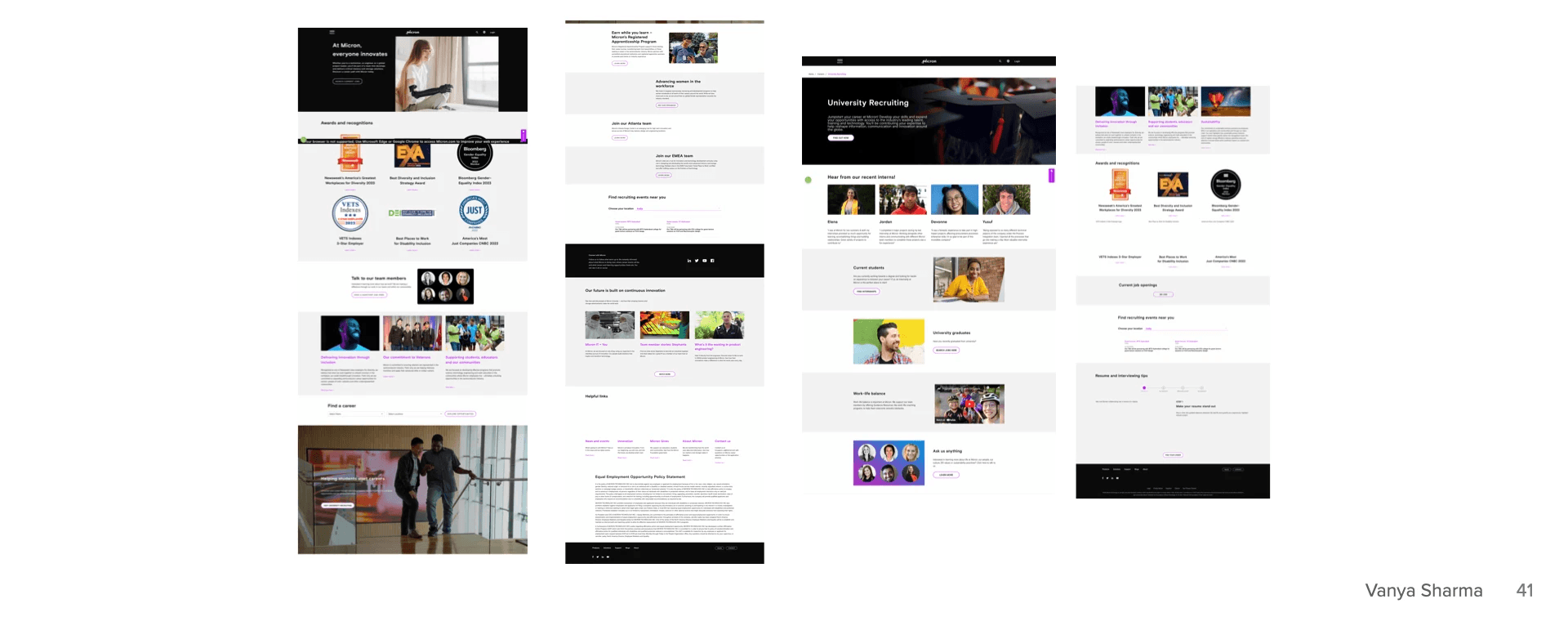
We began by conducting heuristic evaluations, analytics reviews, and stakeholder interviews to uncover friction points across the website. The data was clear: high bounce rates, an unresponsive design, and three priority pages -Careers, Micron Gives, and Diversity & Inclusion — that were underperforming despite being critical to user engagement and brand communication.
In response to stakeholder requirements, I defined the project scope and outlined the initial phase of the redesign around these three pages. They represent key discovery and decision points in Micron's digital product journey, and getting them right would set the pattern for everything that followed.
Decision-Making Process
The purpose of these strategy questions was to guide the decision-making and problem solving process for each of the webpages. These questions helped clarify the context, goals, challenges, and potential solutions in various areas of company, including marketing, product development and project management:
Who is the audience?
What business unit or event is this for?
Is this supporting other media we need to account for - videos, podcasts, live streams?
User Personas
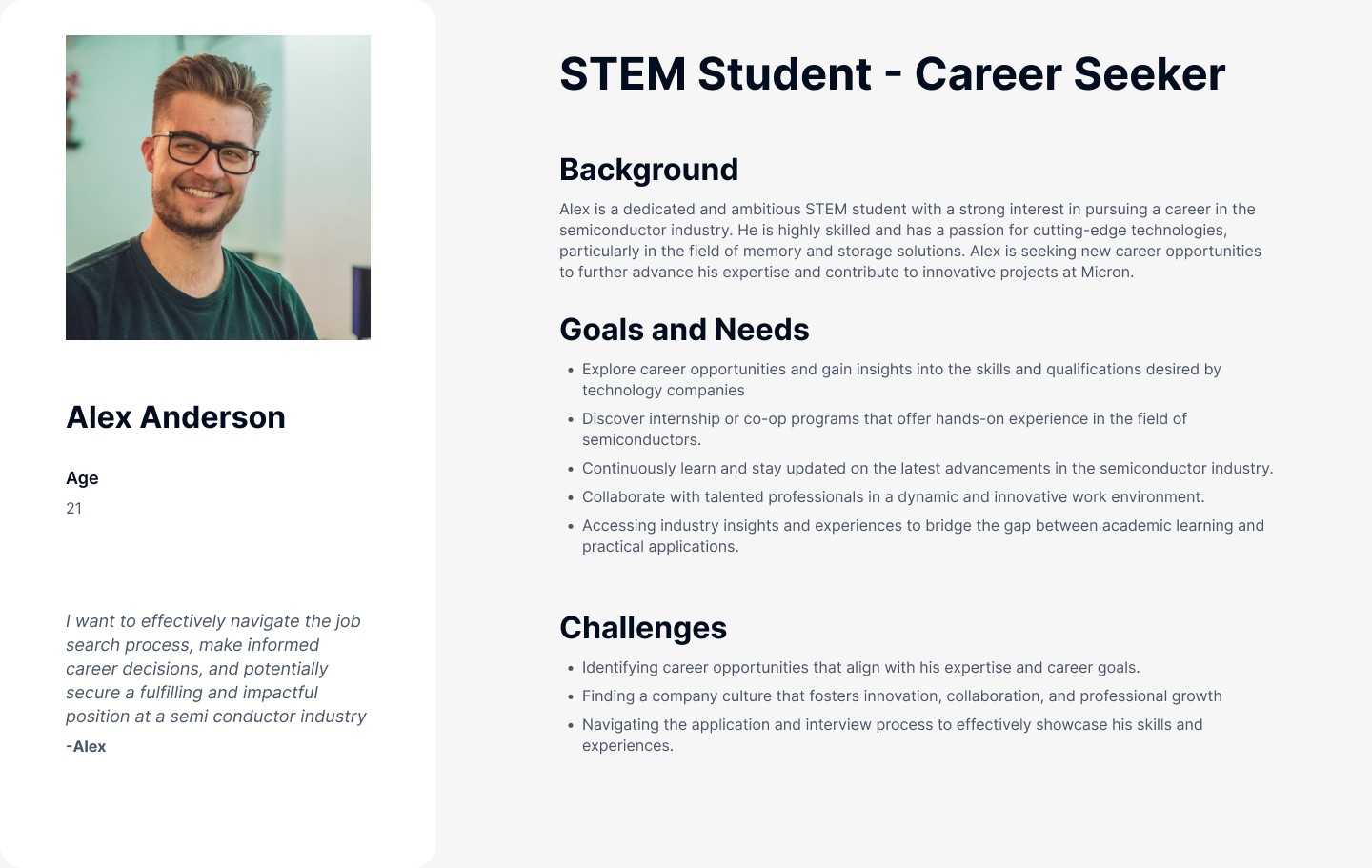
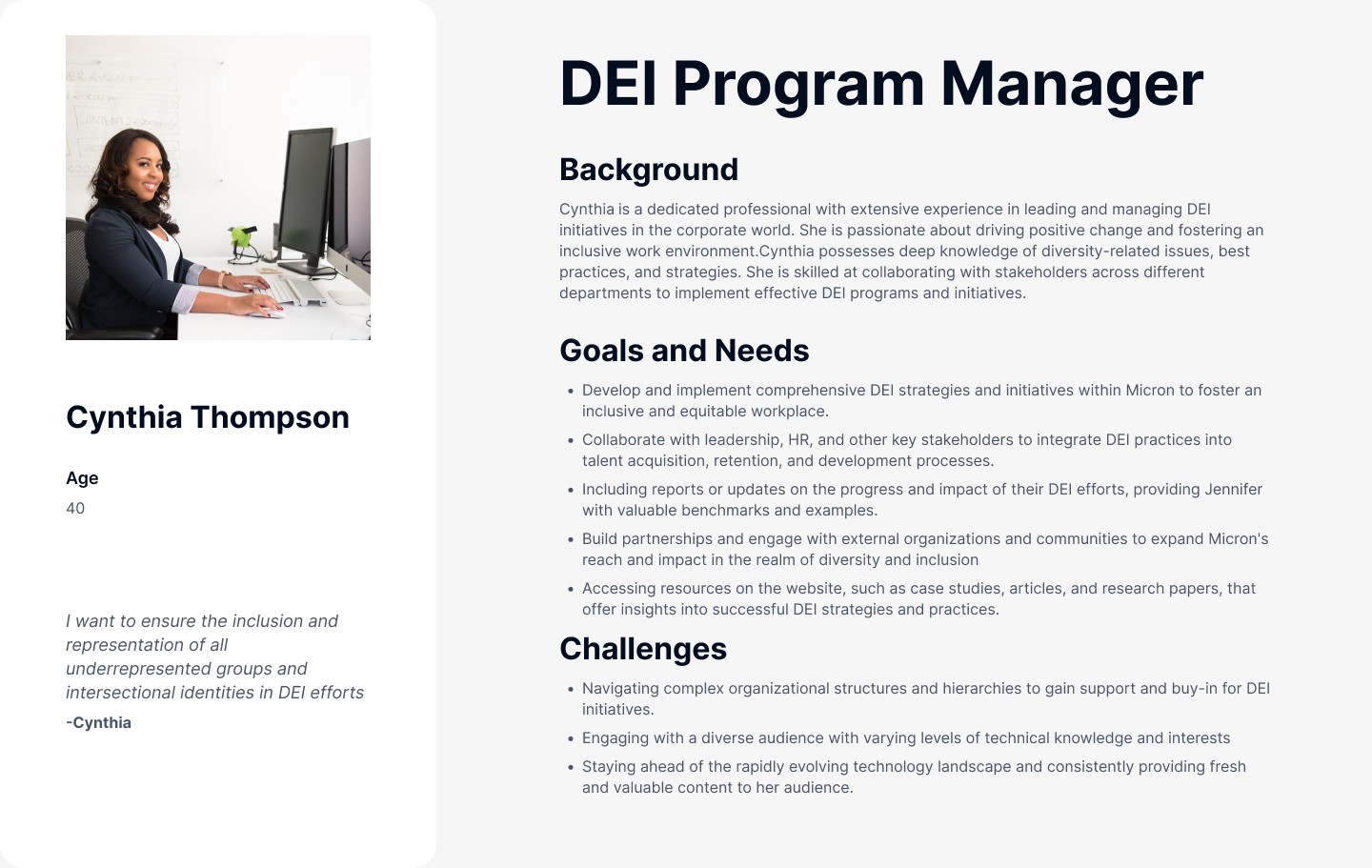
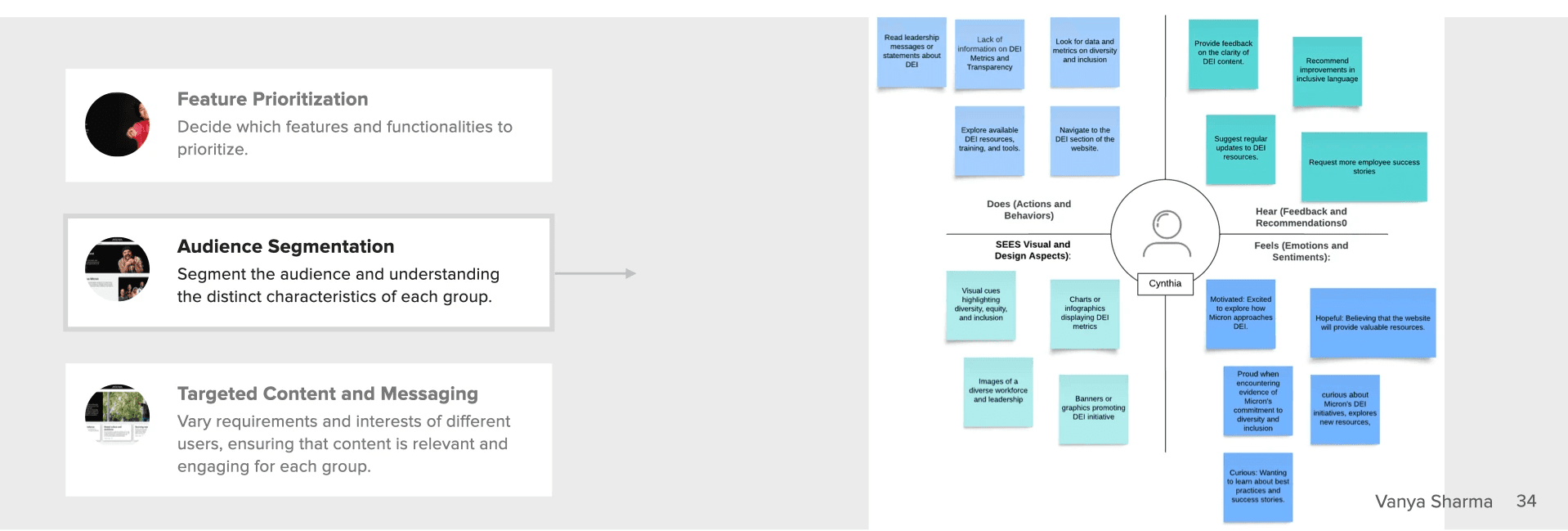
Two personas were developed based on Micron’s target audience, helping us tailor content, prioritize features, and design for the distinct needs and motivations of diverse user groups.

Experience Design
They initially oriented on the basic structure of the homepage and highlight the intended function of each element.
After identifying these personas, I gathered insights that shifted our focus from organization-centered to user-centered. That meant prioritizing features based on real needs, segmenting the audience to understand each group's distinct characteristics, and tailoring content and messaging so each group felt the site was speaking to them.
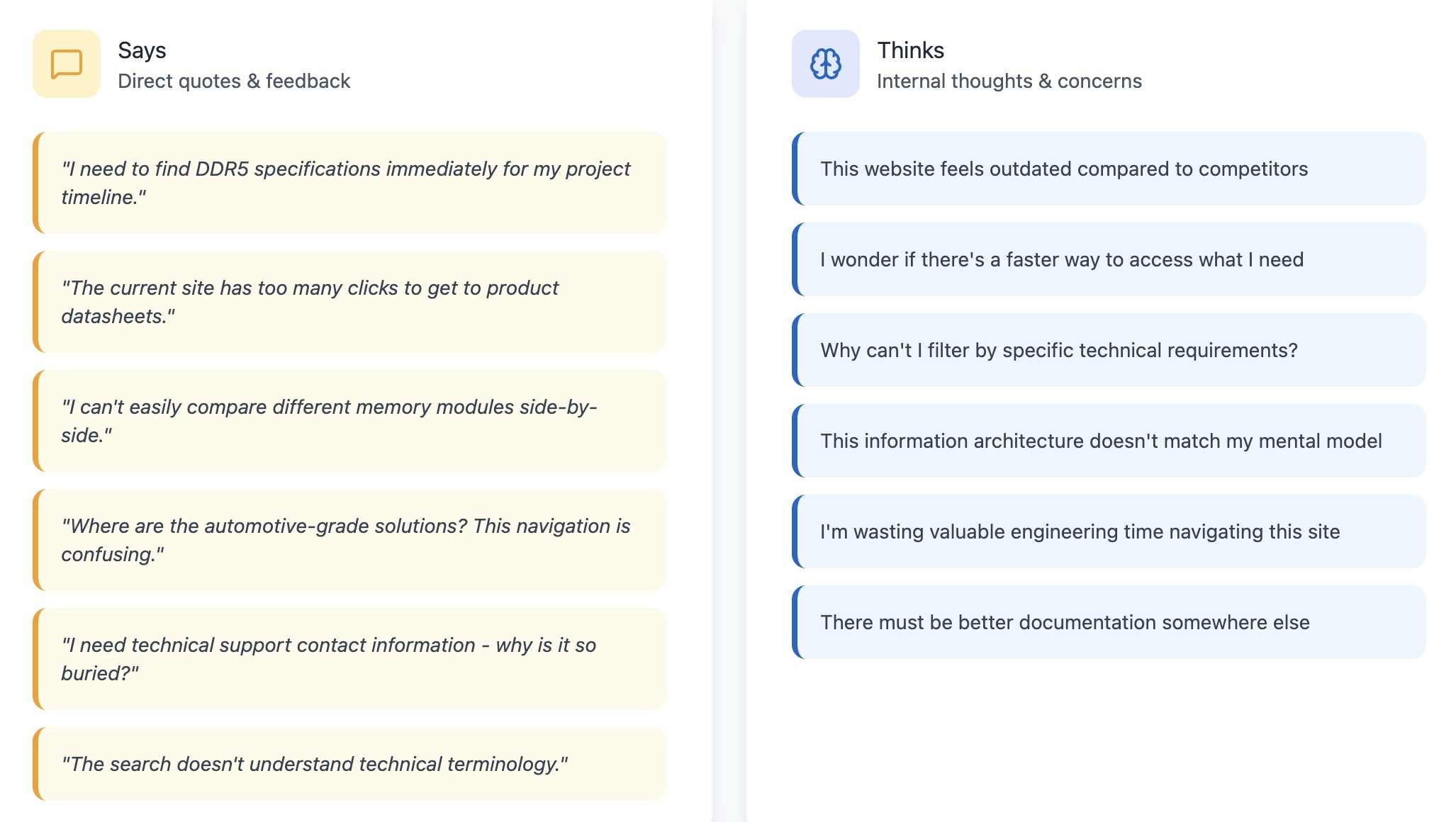
Beyond the two personas, our research captured the end-to-end experience of technical decision-makers - engineers, researchers, and technology buyers - by exploring what they say, think, do, and feel at each stage of their journey. What we heard was telling: "I need to find DDR5 specifications immediately for my project timeline." "The current site has too many clicks to get to product datasheets." "I can't easily compare different memory modules side-by-side."
Usability Studies
This is an examination of users and their needs, which adds realistic context to the design process.
Through interviews, behavioral mapping, and heuristic evaluations, we uncovered friction points such as unclear information architecture, inefficient search, and limited comparison tools that disrupted decision-making and product exploration. These issues directly impacted users’ ability to compare, evaluate, and select products.
Poor Information Architecture
Technical content buried under marketing layers
Inefficient Search
Search doesn't support technical queries or part numbers
Lack of Comparison Tools
No way to compare products side-by-side
Mobile Unfriendly
Technical docs difficult to view on mobile devices
Prototype & design
These are a high fidelity design that represents a final product
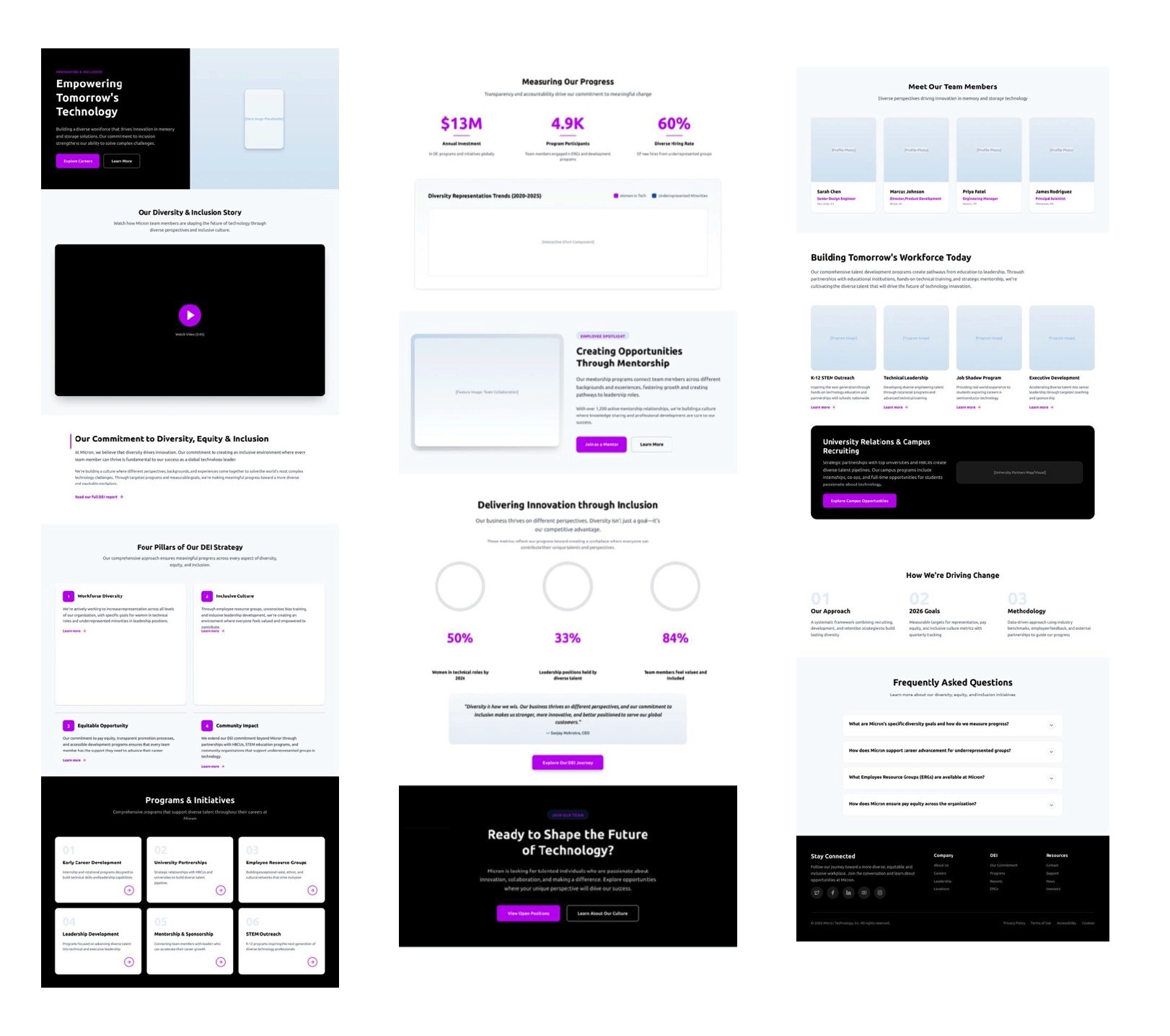
I created low-fidelity and high-fidelity wireframes in Adobe XD with guiding text to help stakeholders visualize user flow and information hierarchy, with a focus on product discovery clarity and decision support. Reviews and input gathered on layout, functionality, and user experience facilitated better design decisions throughout.

The project schematically :
Retrospective
The redesign of the page resulted in a significant increase in overall page visits, indicating improved discoverability and user engagement.
Improved discoverability and clearer information hierarchy supported stronger engagement across key product pages.
15 %
Increase in overall traffic (all devices)
4.3K
Increased monthly users
66 %
Increase in the mobile visits
Retrospective
Careful planning, deep user insights, and continuous iteration played a pivotal role in achieving the strong outcomes of the redesign. A few takeaways have stuck with me since:
Key Outcomes & Results
By refining visual elements and aligning the interface with WCAG guidelines, the redesigned experience became more cohesive, accessible, and fully compatible with screen readers-allowing a wider range of users, including those with disabilities, to navigate key content with ease.
What I Learned
I recognized the importance of creating a responsive website to accommodate mobile devices with different screen sizes and resolutions and frequent incorporation of data-rich graphs and tables.
Organizing large amounts of information into logical groups, using clear labels, and enhancing findability is a crucial challenge.
Retail UX principles, clarity, hierarchy, and comparison, apply even in highly technical, enterprise environments.